How to Build a Growth Strategy: A 5-Step Guide
Increasing your ad budget is not a growth strategy. In this guide, we walk through the five steps to building a growth model you can repeat every quarter by bringing analytics, strategy and planning together in one system.

In short
Fix the data first: a funnel that is measured wrongly leads to wrong decisions.
Choose a single growth goal and break it down into sub-targets per channel.
Direct the budget to the narrowest point in the funnel.
Rank ideas by ICE score and test them in two-week cycles.
Do not start until the strategy has been turned into a 90-day calendar.
What is a growth strategy?
A growth strategy is a plan that describes which customers a brand will reach, through which channels and in what order, in order to grow its revenue. What sets it apart from a traditional marketing plan is that it puts the measure, understand, prioritize, execute, learn loop at its center instead of one-off campaigns.
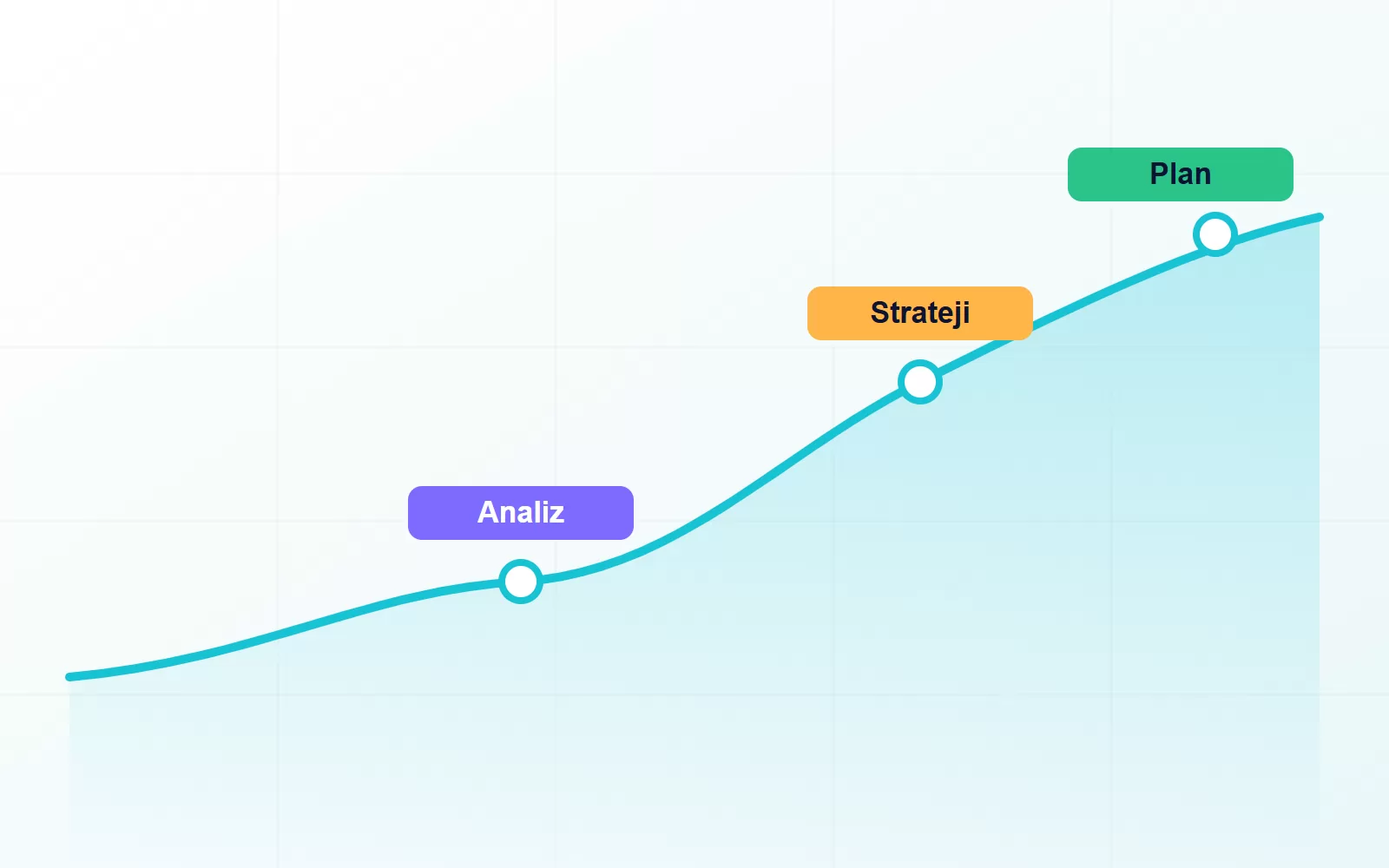
A good growth strategy has three parts: analytics, which defines what will be measured; strategy, which defines where you are going; and planning, which defines who does what and when. When one of them is missing, the system stalls.
1. Set up your measurement
Every growth decision rests on data. If the data is wrong, even the best strategy heads in the wrong direction. That is why the first step is always a measurement audit.
GA4 and Google Tag Manager: are critical events such as purchases, form submissions and calls counted once and correctly?
Cookie consent: is Consent Mode v2 working correctly? Is modeling enabled for users who do not give consent?
Ad platforms: are Google Ads and Meta conversions consistent with GA4?
CRM connection: can you track whether the person who filled in a form became a customer?
You can find a detailed list of these checks in our guide to conversion tracking in GA4.
2. Choose a single growth goal
Scattered goals such as "more traffic, more followers, more sales" pull the team in different directions. Instead, choose a single target metric that best reflects the moment your company creates value, and break it down into sub-metrics. This is called a KPI tree.
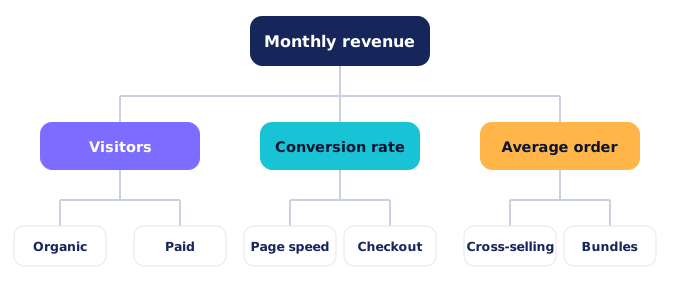
Figure 1. KPI tree: a single goal is broken down into sub-metrics that each team can influence.
This way, the SEO team focuses on organic visitors, the product team on the checkout step and the advertising team on the quality of paid visitors, yet everyone serves the same revenue goal. We explain how to choose the target metric in our article on the North Star metric.
3. Find the bottleneck in your funnel
Before increasing the budget, find out where users drop off. In GA4's funnel exploration report, look at the rate at which each step progresses to the next. The lowest progression rate is the bottleneck holding back growth.
Increasing the ad budget while the bottleneck is on the checkout page is like pouring more water into a leaking bucket.
If the bottleneck is in awareness, social media and video take priority; if it is in consideration, search ads and comparison content; if it is in conversion, landing page tests. Each channel has a different role in the funnel.
4. Prioritize your ideas
Once you have found the bottleneck, the team will come up with dozens of ideas. Instead of trying them all at once, score each idea from 1 to 10 on three criteria and rank them by the average. This method is called ICE scoring.
ICE scoring example
| Idea | Impact | Confidence | Ease | ICE |
|---|---|---|---|---|
| Reduce checkout to a single page | 9 | 7 | 5 | 7.0 |
| Add delivery time to the product page | 6 | 8 | 9 | 7.7 |
| Open a new advertising channel | 7 | 4 | 4 | 5.0 |
| Email to cart abandoners | 7 | 8 | 7 | 7.3 |
The scores in the table are examples. What matters is deciding which test comes first with a shared criterion rather than by debate. For a detailed template, see our guide to ICE scoring.
Let's find your bottleneck together
In a free growth audit, we send you the narrowest point in your funnel and the first three tests in writing.
5. Turn it into a 90-day plan
A strategy only becomes real once it is on the calendar. Split the first 90 days into three months:
Month 1, foundation: measurement fixes, the KPI tree, the first hypotheses and cutting waste in existing campaigns.
Month 2, testing: launching the top tests from the ICE ranking in two-week cycles.
Month 3, scaling: moving budget to the winning channels and messages, and a data-driven plan for the next quarter.
At the end of each cycle, answer three questions in a 30-minute meeting: What did we try? What did we learn? What will we do in the next cycle? We cover how to allocate the budget across channels separately in our article on marketing budget planning.
Common mistakes
Scaling without measuring: increasing the budget while conversion tracking is broken.
Too many goals: every channel having its own definition of success.
Guessing instead of testing: making changes without a control group and then interpreting the result.
Strategy without a calendar: plans that stay in the presentation, with no owner and no dates.
Frequently asked questions
What is the difference between a growth strategy and a marketing plan?
A growth strategy defines where you are going and why: the goal, the audience and the role of each channel. A marketing plan is that strategy translated into a calendar, a budget and assigned owners.
Can a small business build a growth strategy too?
Yes. A free GA4 and Search Console setup, a single growth goal and a simple testing cycle run every two weeks are a sufficient start for small teams as well.
How often should a growth strategy be updated?
Tests should be reviewed every two weeks, the plan monthly and the strategy quarterly. When there is a major change in the market, it is updated sooner.