ChatGPT Ads: What They Are, How They Work and How to Get Started
ChatGPT ads are now open to businesses in more than 60 countries. We explain how ads are matched to conversations, who sees them, how pricing works and how to set up your first campaign step by step.

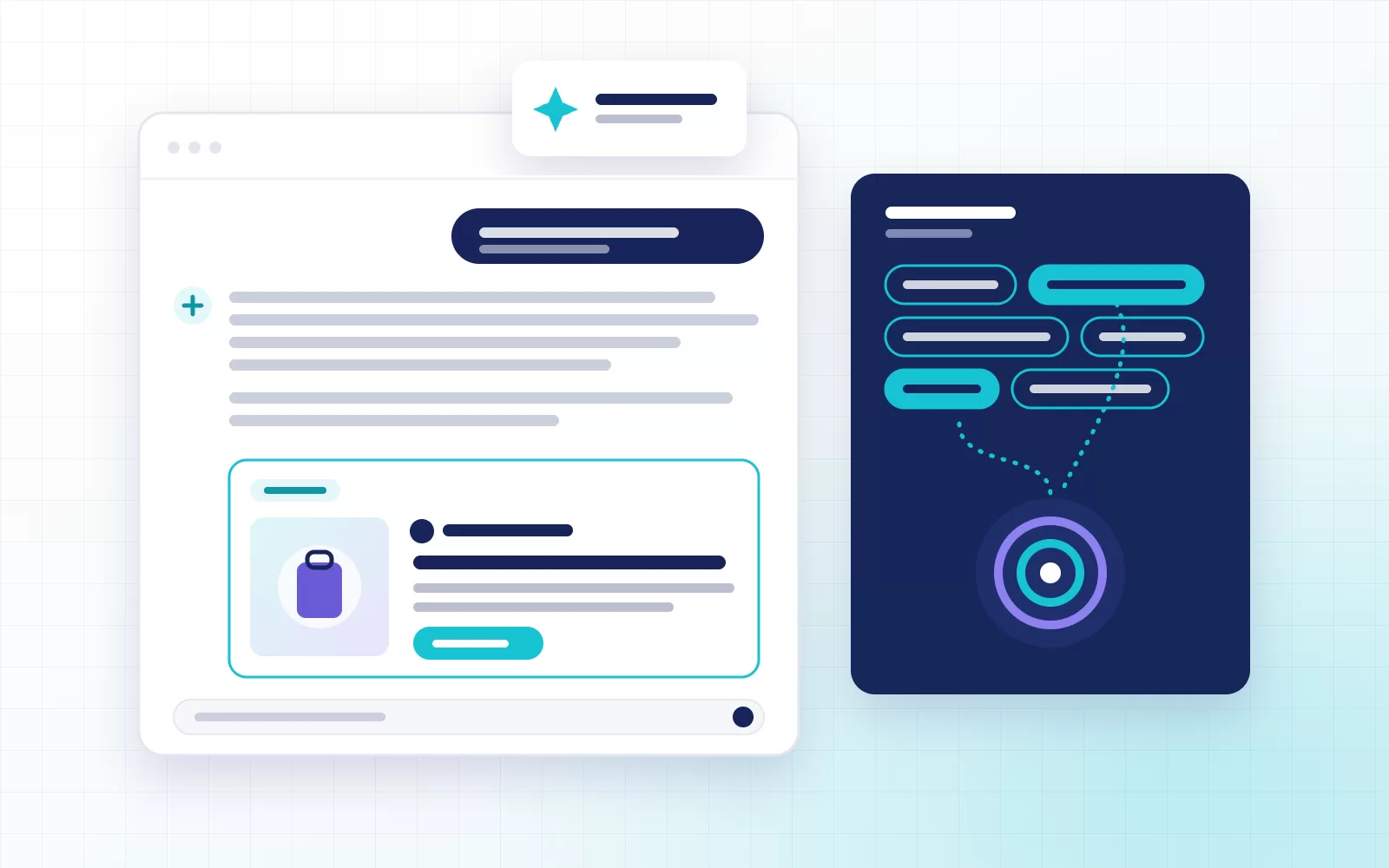
ChatGPT ads let brands appear not in search results or social feeds, but inside the conversations people have with AI. While someone researches a product, compares options or makes a decision, a relevant ad can show up right below ChatGPT's answer.
In 2026 OpenAI opened its Ads Manager to businesses, first in the United States and then in more than 60 countries across Europe, the Middle East, Asia and the Americas. In this guide we explain how ChatGPT ads work, who sees them, how they are priced and how to set up your first campaign step by step. The platform is still in beta, so the details below reflect the situation as of October 2026; for the latest specifics you can also check OpenAI's help page for advertisers.
What are ChatGPT ads?
ChatGPT ads are ad units shown below ChatGPT's responses, separated from the answer and clearly labeled. Each ad includes the advertiser's name and logo, a title, a short description, an image and the landing page that opens on click. The ad does not change the content of ChatGPT's answer; the answer and the ad are kept separate.
The key difference from classic search ads: users don't type a single keyword, they describe their need in full sentences. That means the ad appears in a context that reveals far more clearly what the person actually needs.
How do ChatGPT ads work?
The ads system selects which ad to show based on expected relevance and expected outcomes. To do that, it looks at several signals:
- the context and intent of the current conversation,
- the ad's title, description and landing page,
- context hints the advertiser writes at ad group level,
- if the user has ads personalization switched on, selected signals from their broader ChatGPT use.
Context hints are short sentences describing the needs, situations and topics where your product is useful. One important difference: they are not exact-match keywords as in Google Ads, and they do not guarantee delivery in any particular conversation. Ads are selected through a relevance-weighted second-price auction, so it is not only the bid but also how well the ad fits the conversation that decides the winner.
Who sees ChatGPT ads?
- Ads are shown to users on the free plan and the lower-priced Go plan; there are no ads on Plus, Pro or Business plans.
- Ads are not shown to accounts identified as belonging to users under 18.
- OpenAI states that ads are not placed next to sensitive topics such as health and politics or in conversations that are unsafe for brands.
- Advertisers cannot see users' conversations; they only see aggregated results such as impressions, clicks, spend and conversions.
Where are ChatGPT ads available?
As of October 2026, self-service access to OpenAI Ads Manager is available in more than 60 countries, including the United States, the United Kingdom, all EU member states, Türkiye, India, Japan and Australia. The legal entity that advertises and is billed must be based in one of the listed countries. A few points to keep in mind:
- New accounts can initially advertise only in their home country. Other countries open up once identity verification is approved and a required level of spend has been reached at home.
- The minimum daily budget depends on your billing currency: 25 USD, 15 EUR or 15 GBP, for example.
- Ads personalization is currently unavailable in the European Economic Area and Switzerland, so campaigns targeting these regions should not rely on custom audiences.
ChatGPT ads pricing and budgets
The objective you choose when creating a campaign determines how you pay and what the system optimizes for:
| Objective | Billing | When to choose it |
|---|---|---|
| Views | Per 1,000 impressions (CPM) | For awareness and visibility |
| Clicks | Per valid click (CPC) | To drive traffic to your website |
| Conversions | Per click (oCPC) or per 1,000 impressions (oCPM) | To optimize for a conversion event such as a purchase or a form |
Even with the Conversions objective, you pay per click or per impression, not per conversion. Bids are set at ad group level as a maximum CPM or CPC; for click campaigns, OpenAI recommends starting at 3–5 USD per click. You can set a campaign-total budget or a daily budget. A daily budget works like a seven-day average: spend on a single day can reach up to twice the daily budget, but weekly spend never exceeds seven times the daily budget.
How to launch ChatGPT ads, step by step
1. Open and verify your ad account
You create a business account in OpenAI Ads Manager. Ads will not go live until company details, identity verification and a payment method are complete. Assign account roles properly from the start so that team and agency access does not depend on personal accounts.
2. Set up measurement
To measure conversions, add OpenAI's measurement pixel to your website and define events such as purchases and form submissions. Adding UTM parameters to landing page URLs also lets you see this traffic in your existing analytics tools such as GA4; Ads Manager can also be connected to GA4.
3. Make sure your landing pages are accessible
For ad review and matching, OpenAI's crawlers (OAI-AdsBot and OAI-SearchBot) must be able to reach your landing pages. If a firewall or bot protection blocks them, ads may be rejected or never delivered. This is the technical step that is most often overlooked.
4. Create the campaign
At campaign level you choose the objective, budget, dates, target countries and, optionally, platforms (Android and iOS apps, mobile and desktop web). Beyond countries, you can also target regions, cities and postal codes where available. Note that the campaign objective cannot be changed later; for a different objective you need a new campaign.
5. Build ad groups and write context hints
Build each ad group around a single product, service or customer need. Write context hints as natural sentences rather than keyword lists: describe what you offer, who it helps and in which situations it is useful. “Breathable running shoes for training in warm weather”, for example, gives far more context than simply “running shoes”.
6. Create the ads and launch
- Write several titles and descriptions per product from different angles; the more variety, the more relevant conversations the system can find.
- Describe benefits instead of slogans: state clearly what you offer, who it suits and why it helps.
- Link to the product or content page that matches the ad rather than a generic homepage.
- Use simple images that match the message, and avoid cluttered or overly abstract visuals.
Ads go live after they pass review. Impressions and clicks refresh roughly every 15 minutes, while spend data can be delayed by 7–8 hours, so zero spend in the first hours does not mean nothing has been spent.
ChatGPT ads or Google Ads?
They complement each other rather than compete. Google search campaigns match on keywords and offer large, measurable demand. ChatGPT ads appear in conversations where users describe their needs in detail and are comparing options or making decisions. Because the channel is new, competition and prices have not settled yet, which gives early movers a learning advantage. Rather than shifting budget all at once, start with a small test budget and a clear conversion goal.
Common mistakes with ChatGPT ads
- Writing context hints like a keyword list.
- Launching with a single title and description, which limits matching opportunities.
- Blocking OpenAI's crawlers with bot protection and getting ads rejected.
- Trying to run conversion campaigns without installing the pixel.
- Judging results only in Ads Manager instead of comparing them with GA4 and sales data.
AI channels call for advertising and content strategy to be planned together. In our AI-assisted strategy work, we bring measurement, message testing and budget allocation for new channels into a single plan. For other channels, see our Instagram and Facebook advertising guide. If you would like to assess ChatGPT ads for your brand together, get in touch.